Interactief Voorlezen
interactief voorlezen...
Interactief voorlezen is manier om het verhaal bewust mee te maken. Het zet jonge kinderen tot nadenken. Daarnaast oefen je het begrijpen van dingen rondom een verhaal. Je stelt tijdens het verhaal vragen aan de kinderen en beantwoordt ook de vragen van kinderen. Het is daarom juist zo goed dat er dan geen tekst bij de prenten staat. Er komen dan misschien juist leuke en verassende vragen van een kind. Je hoeft niet steeds dezelfde lijn te volgen van het verhaal. De ene keer richt het kind de aandacht op het benoemen van de dieren, een andere keer zijn het de kleuren.
Er zijn een aantal stappen* in het proces van interactief voorlezen:
*Denk bij elke stap aan het niveau van het kind; een baby of een dreumes heeft een ander taalniveau dan een kleuter. Pas je eigen woorden, spreektempo en zinslengte ook aan.
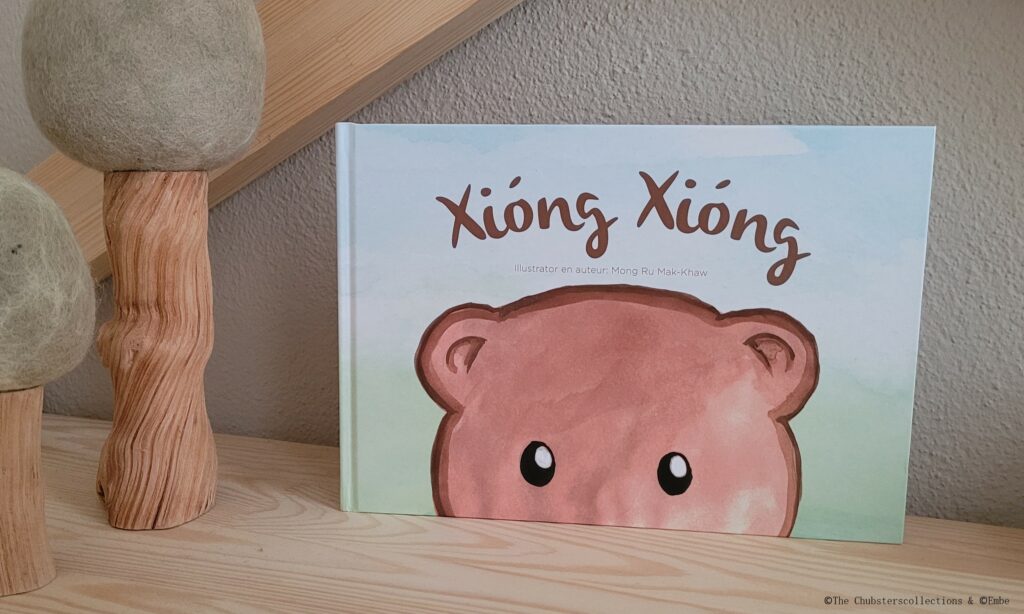
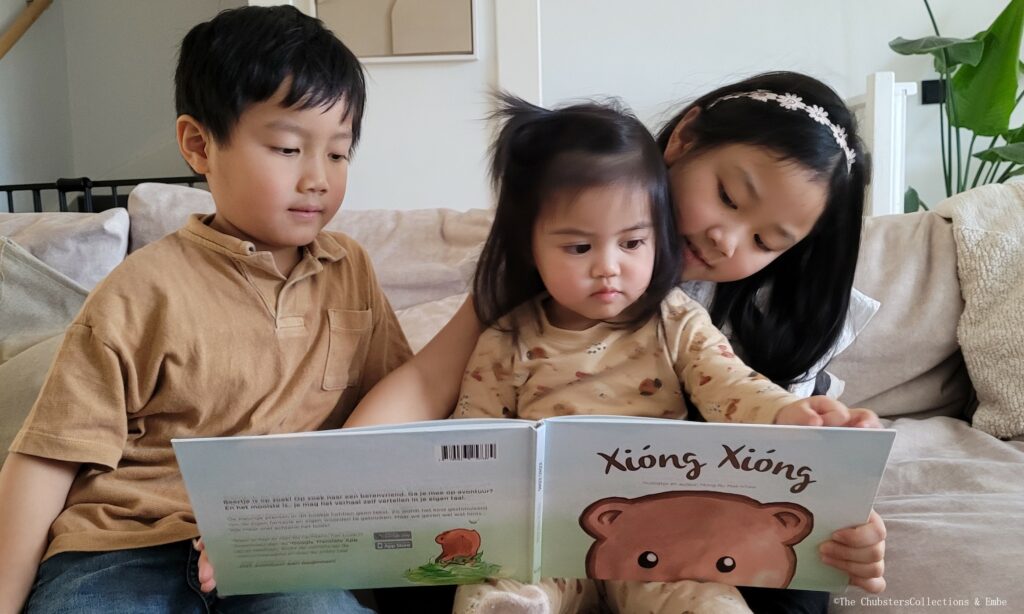
1) Bekijk zelf het verhaal, voordat je boekje gaat laten zien aan het kind/ de kinderen. Bekijk samen de kaft en de prenten van het boek. Laat vervolgens het kind/ de kinderen voorspellen waar het verhaal over gaat. Vraag bijvoorbeeld:
· Over wie gaat het verhaal denk je?
· Waar speelt het zich af?
· Wat gaat er gebeuren?
Bij een jonge baby of dreumes is van belang om ook 3D-materiaal erbij te gebruiken. Denk aan het vasthouden van een knuffelbeer (of andere 3D-dieren), terwijl je samen de kaft en prenten bekijkt.
2) Lees de eerste zin voor (hint! Achterin in het boek) en laat dan het kind/ de kinderen aan het woord. Denk aan het niveau van het kind; pas je woorden en zinnen aan. Bijvoorbeeld:
· Een jonge baby of dreumes beleeft veel plezier met het benoemen en nazeggen van de dierengeluiden.
· Terwijl een peuter en kleuter meer uitdaging nodig heeft: ‘wat gaat er gebeuren denk je?’ of het uitleggen van begrippen zoals de voorzetsels.
· Stel tussendoor vragen over het verhaal en leg begrippen uit.
3) Stel de laatste vraag (hint! achterin in het boek) en laat het kind/ de kinderen deze beantwoorden. Bespreek het verhaal na afloop. Vraag bijvoorbeeld:
· En? Wat vond je van het verhaal?
· Was het verhaal gegaan, zoals je had bedacht?
· Hoe zou jij het verhaal willen laten aflopen?
· Speel na afloop het verhaal nog eens na, met de (gratis) werkbladen. Maar een ander spelletje (met dieren) kan ook! Denk aan een dierenmemory, Kroko-Loco of Pim-Pam-Pet (met dierennamen).
Bij een jonge baby of dreumes zou je het verhaal kunnen afsluiten met een liedje over dieren. Laat het kind vooral zelf kiezen welk dierenliedje het wordt, denk aan: ‘Berend botje’ , ‘alle eendjes zwemmen in het water’ of ‘poesje mauw’. Het is van belang om ook 3D-materiaal erbij te gebruiken tijdens het liedje. Maar een spelletje kan ook! Denk aan een (eenvoudige) dierenpuzzel of 3D-diertjes uit een doos grabbelen en benoemen.
Interactief voorlezen stimuleert en ontwikkelt de denkvaardigheden van kinderen. Kinderen blijken goed in staat om verklaringen te bedenken en problemen op te lossen voor situaties die centraal staan in boeken.*
*Gosen, M.N. (2012)
Interactive Reading
Interactive reading is reading of a picture book in a different way. Let’s make young children think about the different aspects of the story. With the steps of interactive reading process, you will practice new words and explaining those words while telling the story. How? You will ask the children questions during the story. And most imported: you have to answer the children’s questions. Having a picture book with no text is the best way to create new questions, which will lead to new stories. You don’t have to follow the red-line of the story; sometimes the child wants to focus on naming the animals. And another time the focus will be on naming all the colors
There are a number of steps* in the interactive reading process:
*Consider the level of the child at every step; a baby has a different language level than a toddler. Adjust your own words, speaking rate and sentence length.
1) Take a look at the book or story yourself first, before showing the book to the child/children. Than have look with your child/ children at the cover and the pictures of the book. Let the child/children predict the story. For example, ask:
• What’s the story is about?
• Where does the story takes place?
• What will happen?
When you have a young baby or toddler it is also important to use 3D-material. Like holding a teddy bear (or other 3D-animals) while looking at the cover and prints together.
2) Read the first sentence (take a look at the back of the book) and then let the child(ren) take over the story. Consider the level of the child; adjust your words and sentences. For instance:
• A young baby will enjoy naming and repeating the animal sounds.
• While a toddler and preschooler needs more challenge: ‘what do you think will happen?’ or explaining concepts such as the prepositions.
• Ask questions about the story and explain concepts.
3) Ask the last question (hint! at the back of the book) and let the child(ren) answer it. Discuss the story afterwards. For example, ask:
• And? What did you think of the story?
• Did the story go as you imagined?
• How would you like the story to end?
• Re-play the story afterwards, with the (free) worksheets. You can download these from the website. Or playing other games (with animals) is also a great way to follow-up the book. Like the game memory (with animals) or naming animals with the alphabet. With a young baby or toddler you could follow-up the story with a song about animals. Let the child choose which animal song it will be, think of: ‘Old mc Donald had a Farm’, ‘Walking the jungle’ or ‘Alice the Camel’. It is important to also use 3D-material during the song (plushy animals). Make a (simple) animal puzzle or grabbing and naming animal toys from a box.
Interactive reading stimulates and develops children’s comprehension skills. Children appear to be quite capable of coming up with explanations and solving problems for situations.*
*Gosen, M.N. (2012)
Translator Femke van Angeren
Lecture interactive
La lecture interactive est une manière de profiter de la lecture d’un livre d’image de manière différente. Il permet aux jeunes enfants de penser à différents aspects de l’histoire. Vous utilisez de nouveaux mots ou appréhendez d’autres idées autour de l’histoire. Vous posez des questions à l’enfant au fil de l’histoire et accompagnez aussi ses questions. C’est pourquoi il est essentiel qu’il n’y ait pas de texte avec les images. L’enfant peut parfois poser des question surprenantes ou amusantes. Vous n’avez pas à suivre le fil conducteur de l’histoire ; parfois l’enfant veux se concentrer sur le nom des animaux, la prochaine fois sur le nom des couleurs.
Il y a de nombreuses étapes* dans la lecture interactive :
* Gardez en tête le niveau de l’enfant à chaque étape ; un nourrisson a un niveau linguistique différent qu’un bébé. Adaptez vos propres mots, votre vitesse d’élocution et la longueur de vos phrases.
1) Familiarisez-vous d’abord avec le livre ou l’histoire, avant de le partager avec votre ou vos enfant(s). Ensemble regardez la couverture et les images du livre. Puis laissez-le ou les enfant(s) prédire ce que l’histoire raconte. Demandez, par exemple :
· De qui parle cette histoire ?
· Où se passe l’histoire ?
· Que va-t-il se passer ?
Avec un nourrisson ou un enfant il est important également d’utiliser des objets en 3D. Par exemple un ourson en peluche (ou un autre animal en peluche) lorsque vous regardez ensemble la couverture ou les images.
2) Lisez la première phrase (regarder la quatrième de couverture) et puis laissez l’enfant prendre la main. Gardez en tête le niveau de l’enfant, adaptez le choix des mots et des phrases. Par exemple :
· Un nourrisson aimera nommer et répéter le cri des animaux.
· Alors qu’un bébé ou un enfant aura besoin d’être challengé : « Que va-t-il se passer ? » ou bien lui expliquer certains concepts grammaticaux comme les prépositions.
· Posez des questions sur l’histoire et expliquez les différents concepts
3) Posez la dernière question (un conseil : regardez la quatrième de couverture) et laissez l’enfant y répondre. Discutez de l’histoire ensuite. Par exemple, demandez :
· Et alors ? Qu’as-tu pensé de l’histoire ?
· Est-ce que l’histoire s’est passée comme tu l’imaginais ?
· Comment aurais-tu aimé que l’histoire se termine ?
· Puis jouez à nouveau l’histoire, avec les dossiers (gratuits). Vous pouvez les télécharger sur le site internet. Ou bien jouez à d’autres jeux (avec des animaux) est également une bonne manière de faire un suivi du livre. Par exemple un memory (avec des animaux) ou bien un abécédaire avec des animaux.
Avec un nourrisson ou un bébé, vous pouvez donnez suite à l’histoire avec des chansons sur les animaux. Laissez l’enfant choisir quelle chanson il aimerait. Pensez par exemple « Une poule sur un mur », « Ah les crocodiles » ou bien encore « Le fermier dans son pré ». C’est important aussi d’utiliser des objets en 3D pendant les chansons (un animal en peluche par exemple).
Enfin vous pouvez faire un puzzle (simple) avec des animaux ou bien piochez et nommez des animaux en jouets dans une boîte.
La lecture interactive stimule et développe leurs capacités de compréhension. Les enfants sont tout à fait capables de proposer des explications ou de résoudre des problèmes qui sont aux centre de leurs histoires. *
*Gosen, M.N. (2012)
Traducteur Pierre Morvan
互动式朗读—用自己的语言朗读
互动式朗读是有意识地体验故事的方式。它使幼童思考,还可以练习对故事的理解。你可以在故事中向孩子们提问, 也可以回答孩子们的问题。这正是为什么绘本中没有文字和图片的原因。孩子很有可能提出让你意想不到的问题。你 不必总是遵循故事的同一路线。一次,孩子专注于动物的命名,另一次则专注于颜色。
在互动式朗读的过程中,有几个步骤*:
*每一步都要考虑孩子的水平;婴儿或幼儿的语言水平与学龄前儿童不同。因此要调整自己的用词,说话速度和 句子长度。
1) 在给孩子看书之前,自己先预览故事。一起看看书的封面和图画。然后让孩子/儿童预测故事的内容。比如说, 问孩子:你认为这个故事是讲谁的?
· 故事发生在哪里?
· 将会发生什么?
对于幼童,包括三维材料是很重要的。可以考虑抱着泰迪熊(或其他玩偶),同时一起看封面和图画。
2) 读出第一句话(提示在书的后面可以找到),然后让孩子讲。考虑孩子的水平;调整你的词语和句子。比如说:
· 小婴儿或学步儿童对命名和模仿动物的声音很感兴趣。
· 而幼儿和学龄前儿童需要更多的挑战:“你认为会发生什么?“或解释介词等概念。
· 在这之间,提出有关故事的问题并解释概念。
3) 提出最后一个问题(提示在书的后面可以找到),让孩子回答。事后讨论故事。例如,问:
· 然后呢?你对这个故事有什么看法?
· 故事是否像你想象的那样发展?
· 你希望故事如何结尾?
· 之后,用(免费的)工作表再次播放一次这个故事。但是,另一个游戏(与动物)也是可能的! 比如,动物卡记 忆游戏。
对于婴儿或学步儿童,你可以用一首关于动物的歌曲来结束这个故事。重要的是,让孩子选择哪首动物歌曲。在歌 曲中加入3D材料是很重要的。但是游戏也是可以的! 想想看,一个(简单的)动物拼图或从盒子里挖出三维动物并给 它们命名。
互动式的朗读可以刺激和发展儿童的思维能力。事实证明,孩子们很善于为书中的核心情节想出解释和解决问题*
* Gossen, N.M. (2012)
翻译者 李雪晶
Etkileşimli Okuma – kendi
dilinizde sesli okuma
Etkileşimli okuma, hikayeyi bilinçli olarak deneyimlemenin
bir yoludur. Bu küçük çocukların düşünmesini sağlar. Ayrıca hikaye ile ilgili olan durumlarıda anlamaya yardımcı olur. Hikayeyi okuma esnasında
çocuklara
sorular sorulur ve çocuklardan
gelen sorularda cevaplanır. Tam da bu yüzden resimlerin yanında metin
olmaması çok iyidir. Bu sebeple çocuklar eğlenceli ve şaşırtıcı sorular sorabilir. Her
zaman hikayenin aynı çizgisini takip etmek
zorunda değilsiniz. Çocuk bazen
ilgisini hayvanları isimlendirmeye bazende
renklere odaklanır.
Etkileşimli okuma sürecinde birkaç adım* vardır:
*Her adımda çocuğun seviyesini düşünün; bir bebek veya yeni yürümeye başlayan çocuğun dil seviyesi, okul öncesi bir çocuğun seviyesinden farklıdır. Kendi sözcüklerinizi, konuşma hızınızı ve cümle uzunluğunuzuda ayarlayın.
….inşaat halinde….